
How Middle Eastern Aviation is Reducing Pilot Training Costs and Increasing Safety with Simulation


The Middle Eastern aviation sector is navigating a period of very quick expansion, supported by huge capital investments in infrastructure and fleet renewals. As regional players strive to solidify their positions as global logistics and tourism hubs, the demand for qualified flight crew has increased to critical levels. According to the Boeing Pilot and Technician Outlook, the Middle East alone is projected to require more than 58,000 new pilots over the next two decades to support the rapid growth of both narrowbody and widebody fleets.

To put this growth into perspective, preparing these 58,000 new pilots will require approximately 11.6 million flight training hours and a staggering 1.1 million hours of full-flight simulator (FFS) training. When fully utilised, a single full-flight simulator is typically expected to provide between 5,000 and 6,000 training hours annually, meaning the regional infrastructure will require many more dedicated training operating at peak efficiency.
However, this expansion comes during a highly complex operational era. The Middle Eastern aviation sector is entering a defining phase where strong financial performance is matched by a dynamic risk landscape. Airlines and specialised operators are grappling with volatile jet fuel prices, geopolitical airspace disruptions that increase flight times, and significantly higher war-risk premiums that add significant cost per flight hour. The days of relatively low-cost post-pandemic recovery has been replaced by a period of thinner margins and increased vulnerability to regional shocks.
In this environment, training capacity and operational efficiency are critical. Operators must rely heavily on advanced flight simulation not only as a teaching tool, but as a pillar of their cost-mitigation and risk-management strategies. Partnering with a dedicated flight simulator support company, one that provides specialised maintenance, engineering, and regulatory compliance support, is one strategic key to unlocking maximum ROI, achieving the expected high levels of safety, and keeping your critical simulation assets running around the clock.
Let's take a look at the four key points that Middle Eastern aviation operators should consider when it comes to flight training and simulation.
Key Point 1 - Maximising Cost-Efficiency in a High-Stakes Market
With airlines facing mounting operational bills and economic pressures, simulation provides a predictable, controlled environment for training that is completely decoupled from the variables of the live aviation market. Proper simulator maintenance and engineering support turn these complex devices into powerful cost-saving engines.
The Financial Architecture of Flight Simulation
The economic rationale for simulator-based training centres on the significant difference between the hourly operating costs of a simulator and those of a commercial aircraft. Operating a flight simulator typically costs between a mere 5% and 20% of the cost of operating the airframe it replicates.

To illustrate, operating a live narrowbody jet (such as an Airbus A320 or Boeing 737) costs an estimated $5,000 to $8,000 per hour. In contrast, the hourly cost of operating a Full Flight Simulator (FFS) for the same aircraft drops to between $600 and $800. For widebody jets like the Boeing 777 or Airbus A350, live flight costs increase to $15,000 to $25,000 per hour, while simulator equivalents remain a fraction of the price at $800 to $1,200 per hour. While acquiring a Level D Full Flight Simulator requires a significant upfront capital investment, the amortisation of this cost happens rapidly when factored against the massive fuel, insurance, and crew savings achieved by grounding training operations. Major global airlines utilising Level D simulators report saving more than 20 million gallons of fuel annually.
Mitigating the Billion-Dollar Impact of Aircraft on Ground (AOG)
Beyond direct hourly costs, shifting training to simulators protects the live fleet. Live flight training, particularly base training involving repeated takeoffs and landings to meet licensing requirements, subjects the real aircraft's landing gear, brakes, and engines to high levels of wear and tear. In a simulated environment, these mechanical degradation costs are entirely non-existent.
Furthermore, live training carries the risk of incidents that lead to Aircraft on Ground (AOG) impacts requiring extended maintenance. Globally, AOG is estimated to cost the airline industry a staggering $62 billion annually. If a training incident occurs in a real aircraft, the resulting downtime, lost revenue, and repair costs can easily exceed the entire cost of a simulator training program. Strangely enough, we use the term AOG in the simulator world as well - even though the simulator is always on the ground, and it's not exactly an aircraft; but it carries the same level of importance - all hands are on deck to get the system back up and running so that training can continue.
How Expert Support Optimises Asset ROI

A simulator is only a cost-saving tool if it is operational. High-fidelity flight simulator training devices are incredibly complex machines that require ongoing and significant upkeep. Specialised maintenance and engineering support ensures maximum uptime and operational efficiency for your devices. This requires the management of technical complexities so that your FFS units can hit their potential of 5,000 to 6,000 annual training hours without unscheduled technical disruptions. Whether it is managing visual system alignment, motion system hydraulics or electro-mechanical actuators, or avionics software updates, they're all necessary to ensure you extract every dollar of value from your simulator investment.
Key Point 2 - Safety for Both Airlines and Specialised Operators
As we all know, the foremost priority in aviation is safety, and there is no substitute for the essentially risk-free environment of a flight simulator. A safety-focused operator knows that you can execute manoeuvres in a simulator that you cannot (and absolutely should not) attempt in a live aircraft (double engine failure anyone?).
Mastering the Startle Factor for Commercial Airlines
In traditional live-flight training, instructors are severely limited in the types of emergencies they can introduce. For example, no instructor is going to shut off the fuel during a live takeoff to introduce an engine failure. You cannot safely replicate partial and full avionics failures, or total electrical failures (which are rare but have occurred in real-world scenarios) in a live aircraft, the risk is simply too high.
In a simulator, instructors can introduce these exact scenarios safely. Furthermore, simulators allow pilots to face the critical "startle factor." Upset recovery training, which teaches pilots how to recognise and recover from unintended extreme attitudes, is highly effective in a simulator where the visual display creates a visceral experience of diving toward the ground, without the fatal risks associated with live recovery training.
The simulator allows the workload to be modulated, simulating the chaotic reality of an emergency. Pilots can practice communicating with Air Traffic Control (ATC), coordinating with cabin crew, and managing complex systems simultaneously; all while flying through challenging weather or diverting to unfamiliar airports. Sometimes, a pilot has to make a mistake to learn a lesson deeply, and it is infinitely better to make that mistake in the simulator than in the aircraft.
Support for Helicopter, Aeromedical, and SAR Operators
For smaller and specialised operators, such as helicopter pilots flying aeromedical evacuations or Search and Rescue (SAR) missions, simulators are just as important. Simulator visual systems are now incredibly advanced, allowing helicopter crews to train for highly dangerous and specific missions.

Pilots can realistically train for off-airport medical evacuations, utilising Night Vision Goggles (NVG), or landing on offshore oil rigs in high-wind conditions. When pilots look through NVG equipment in an advanced simulator, they see pretty much exactly what they would see in the actual aircraft. Regional military and defence forces, such as the Royal Saudi Air Force (RSAF), are actively expanding their in-house simulation capabilities, modernising Bell 412 helicopter simulators and deploying detailed 3D database environments to ensure absolute mission readiness.
The Importance of Fidelity
A simulator's safety benefits are almost entirely dependent on its fidelity. If a simulator does not near-perfectly replicate the tactile feedback and system logic of the real aircraft, it can create negative training outcomes. For instance, if an aircraft behaves differently during an actual engine-out scenario than it did in the simulator, the pilot's muscle memory could fail them in a real-life situation. A highly engaged engineering support team ensures that your devices are calibrated and maintained so that the systems continue to match the real aircraft, supporting skills learned on the ground to transfer directly to the sky.
Key Point 3 - Navigating Middle East Aviation Regulatory Compliance
The Middle East features some of the most meticulous and forward-thinking civil aviation authorities in the world, and navigating the qualification of Flight Simulation Training Devices (FSTDs) is a highly specialised task.
Meeting GCAA and GACA Frameworks
Operators in the United Arab Emirates must comply with regulations enforced by the General Civil Aviation Authority (GCAA). Training organisations need to navigate frameworks such as CAR-FCL (Flight Crew Licensing), CAR-ATO (Approved Training Organisations), and CAR-OPS (Air Operations). The GCAA mandates comprehensive tracking of training programs, instructor qualifications, and audit-ready documentation. In Saudi Arabia, the General Authority of Civil Aviation (GACA) is similarly transforming its regulatory landscape, aligning with international standards (such as FAA certification rulesets) to support rapid aviation growth and the introduction of advanced air mobility, like electric air taxis.
The Transition to Evidence-Based Training (EBT)
The global aviation industry is undergoing a massive paradigm shift in how pilots are trained, moving away from legacy task-based checking toward Evidence-Based Training (EBT) and Competency-Based Training and Assessment (CBTA).
Traditional training programs, largely derived from early-generation jet accident data, focused on a "tick box" approach of repeating rote manoeuvers. However, modern highly automated aircraft require different skills. IATA flight data analysis reveals that manual aircraft control remains a factor in 52% of fatal accidents, and poor situational awareness (often caused by "automation surprises") is a growing threat. EBT utilises massive amounts of real-world flight data to identify these exact threats, prioritising the development of core competencies (like leadership, problem-solving, and workload management) rather than just testing individual manoeuvers.
Middle Eastern regulators and airlines are heavily adopting this data-driven approach. The UAE GCAA published Safety Decision 2021-11 to formally adopt Evidence-Based Training for recurrent pilot training, requiring operators to implement specialised EBT programs using qualified FSTDs. In Saudi Arabia, carriers like flynas have partnered with Airbus to become the first in the Kingdom to adopt the EBT program.
How Compliance Support Protects Your Operation
Navigating these complex regulatory environments is not just a paperwork exercise; it is operational survival. FSTDs must maintain their qualification levels (e.g., Level D) for pilots to legally log their training hours. If a simulator falls out of compliance due to poor maintenance or failed audits, your training pipeline halts.
Ideally, you're looking for end-to-end regulatory support and device management, whether it's contracted in, or conducted in house. Understanding the exact maintenance tracking, compliance reporting, and qualification standards required by the GCAA, GACA, and other regional authorities is critical to achieving this outcome. By managing the complex compliance lifecycle of your simulator assets, you ensure your training centres remain fully accredited, your trainees receive fully logged credit, and your organisation can transition into modern frameworks like EBT.
Key Point 4 - Eco-Friendly Aviation and the Green Training Imperative
As the aviation industry targets a goal of net-zero emissions by 2050, international agencies are pushing to reduce emissions directly at their source. While new engine technologies and sustainable aviation fuels (SAF) are part of the solution, flight simulation offers an immediate support to the reduction in the industry's environmental footprint.
Reducing the Carbon Footprint
Shifting more pilot training to simulators yields extraordinary benefits. Operating an actual aircraft for training burns thousands of gallons of Jet A-1 fuel, generating significant noise pollution and greenhouse gas emissions.
For example, a traditional airline training session in a live narrowbody or widebody jet, or twin engined helicopter, generates a significant carbon footprint. By moving those hours into a virtual environment, you immediately eliminate those direct emissions. Furthermore, simulators completely remove the noise pollution associated with low-altitude training patterns near local communities.
Building Sustainable Simulation Centres
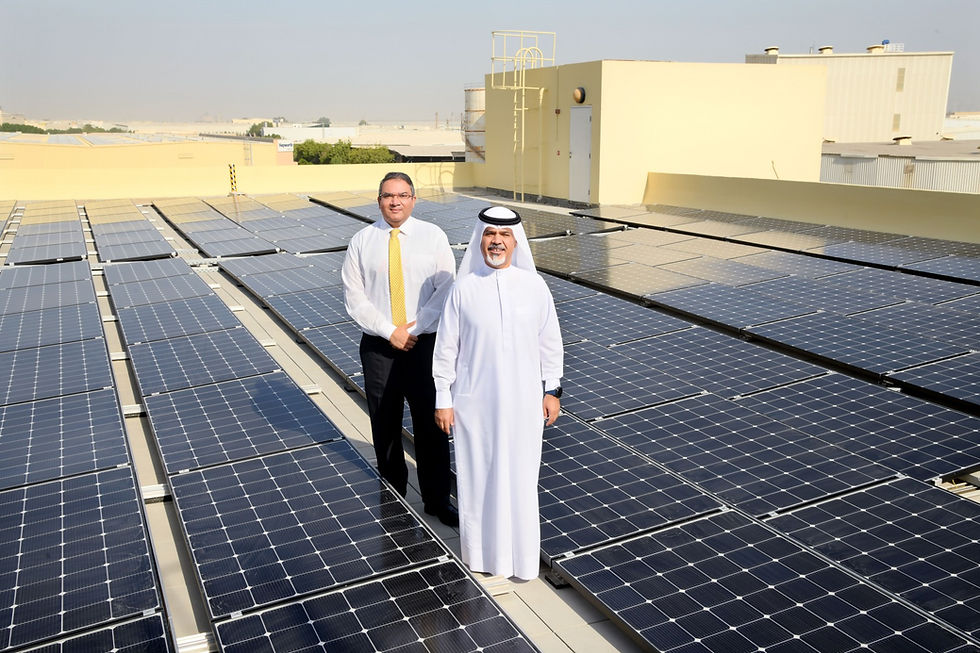
The energy required to run flight simulators is minimal compared to the environmental cost of burning aviation fuel, and it is becoming even greener. Regional leaders are already demonstrating how to build sustainable simulation infrastructure. Emirates Airline's new $135 million pilot training centre, designed to house six FFS bays for the A350 and B777X, is specifically being equipped to use solar power to dramatically reduce its energy consumption.
Furthermore, as the Middle East prepares for the future of Advanced Air Mobility (such as GACA's agreements to deploy electric air taxis in Saudi Arabia) simulation will be the exclusive backbone of pilot certification for these novel, eco-friendly aircraft.
Expanding Immersive XR Solutions
Sustainability and cost-efficiency are also driving the adoption of Extended Reality (XR) across the Middle East. XR significantly reduces the need for physical infrastructure and the materials required to build static training mock-ups.

Emirates Airline is pioneering this with its MIRA platform, utilising VR headsets and 3D modelling to train its 23,000 cabin crew members. The platform features photorealistic interiors of the A380, B777, and A350, allowing crew to practice critical safety and emergency procedures (SEP) like firefighting and door operations in a digital space. Utilising haptic gloves developed by SenseGlove, trainees can actually "feel" the virtual environment, reinforcing vital muscle memory. Because this training can be done on VR headsets or 2D mobile devices anywhere, it eliminates the need for crews to commute to specialised physical centres, further reducing the carbon footprint and operational costs.
Supporting the maintenance and integration of both traditional full-flight simulators and next-generation XR training systems is a growth area in the industry in the Middle East. By ensuring your simulation hardware runs efficiently and incorporates the latest technological advancements, you help your organisation meet its Environmental, Social, and Governance (ESG) targets while simultaneously driving down operational costs.
Acquisition, Operation, and Optimisation; All Essential
The Middle Eastern aviation sector is writing a new chapter of global dominance. With airlines like Emirates expanding its simulator capacity by 54%, and Riyadh Air acquiring state-of-the-art A321neo and Boeing 787 simulators ahead of its launch, the region's reliance on simulation infrastructure has never been greater.
Whether you are a rapidly expanding commercial airline requiring a multi-bay simulator centre, an aviation academy managing an ab-initio cadet pipeline, or a special missions operator conducting critical aeromedical and SAR missions, managing these complex technological assets should not distract from your core mission of flying.
From pre-purchase inspections and the acquisition of new devices, to daily technical maintenance, major system upgrades, and navigating strict GCAA and GACA regulatory compliance, you need a dedicated support engine behind your flight simulation operations to have peace of mind that your training outcomes will always be met. Don't let simulator downtime, lapsed certifications, or poor engineering fidelity bottleneck your growth or compromise your safety standards.


Comments